Smart and Efficient Communication: Optimal Document Management in Modern Housing Associations

Customer Case Study
Industry:
Customer Case Studies

Housing associations, with tens of thousands of clients and numerous suppliers and partners, bear a great responsibility when it comes to protecting privacy-sensitive data. It is therefore not surprising that these associations invested in document management systems (DMS) early on. Digitization, scaling up, and various forms of communication, in turn, present new challenges.

Our Solutions

Five Challenges Facing Housing Associations

Many DMS systems no longer meet today's requirements, resulting in inconvenience, compliance challenges, and unnecessary costs. Here are five common challenges we frequently observe in practice.

Challenge 1: Deteriorating Information Provision
Mergers increase the size of housing associations, but this often has a negative impact on the overall performance of information provision. Information provision can also deteriorate. This is because the amount of information per tenant is constantly growing and becoming fragmented across various systems. Furthermore, communication takes place in various ways and through a wide range of channels.

Challenge 2: Getting Caught Up in Complex Folder Structures
Unclear guidelines and complex folder structures make it difficult to provide timely and efficient access to documents. What makes sense to one employee may not make sense to another. This phenomenon, incidentally, is not unique to housing associations.

Challenge 3: Limited or No Integration with Other Systems
Often, a 360° view is lacking due to difficulties integrating with other systems or mobile applications. Even if it is possible to link systems together, this often involves enormous investments.

Challenge 4: Not Being Prepared for New Forms of Communication
Traditional systems are not suited for the variety of communication methods, such as emails, images, and audio files. These systems were originally developed primarily for storing text files. WhatsApp didn’t exist yet, and no tenant was sending photos or videos.

Challenge 5: Time-Consuming Redaction of Privacy-Sensitive Documents
Manually redacting privacy-sensitive documents to comply with laws and regulations is a time-consuming process. This is required when a tenant is no longer a tenant, as his or her file must be redacted.

OneXillium - Logo_own-hearth

“In the mail and repro department, all incoming mail is digitized and intelligently tagged with metadata. This benefits all departments, not just those responsible for tenant information.”

Romea Mazzei,
, Facility Staff Member

Accept advertising cookies to view this content.

Accept advertising cookies

The document-intensive nature

A Look Behind the Scenes

The day-to-day, document-intensive nature of housing authorities goes far beyond mere communication between the housing authority and its thousands of tenants. Different departments have their own specific needs.

This department handles all documentation related to lease and purchase agreements. Housing authorities sometimes also offer social housing units for sale. They are responsible for drafting, negotiating, and finalizing lease and purchase agreements.

This department is responsible for managing technical documents, such as maintenance reports, repair requests, and technical drawings. These days, this department also receives a lot of visual material, such as photos of damage or instructional videos from external parties. Here, too, it is important to have access to all the necessary information available in order to carry out maintenance and repairs efficiently.

Everything that comes in on paper is scanned and automatically sent digitally to the appropriate department. Outdated systems often require a lot of manual work to send documents to the right colleagues and retrieve them later.

For financial administration, it is essential to centrally manage invoices, payment receipts, rent and service charges, and other agreements. Online accounting systems are often used for this purpose. That is why it is important to integrate this financial information so that, for example, customer service representatives have access to the correct data during conversations with tenants.

These employees are responsible for all incoming and outgoing communication with tenants, suppliers, and other stakeholders. They manage documents such as letters, emails, and notifications. Today’s tenants all use smartphones. It is therefore essential that WhatsApp messages, audio files, photos, and the like are accessible in one place to ensure a 360° view of the customer.

This department is responsible for keeping all legal documents and compliance-related materials up to date, but the mandatory data cleanup is often the problem. Examples include lease agreements, legal statements, and compliance documents. Although much of the paperwork from the past has been eliminated, this remains an ongoing process for them.

The management team needs reliable reports and analyses to make informed decisions. This is often challenging because mergers have resulted in multiple systems. As a result, there is no single system that can serve as the central hub.

OneXillium - Logo_own-hearth

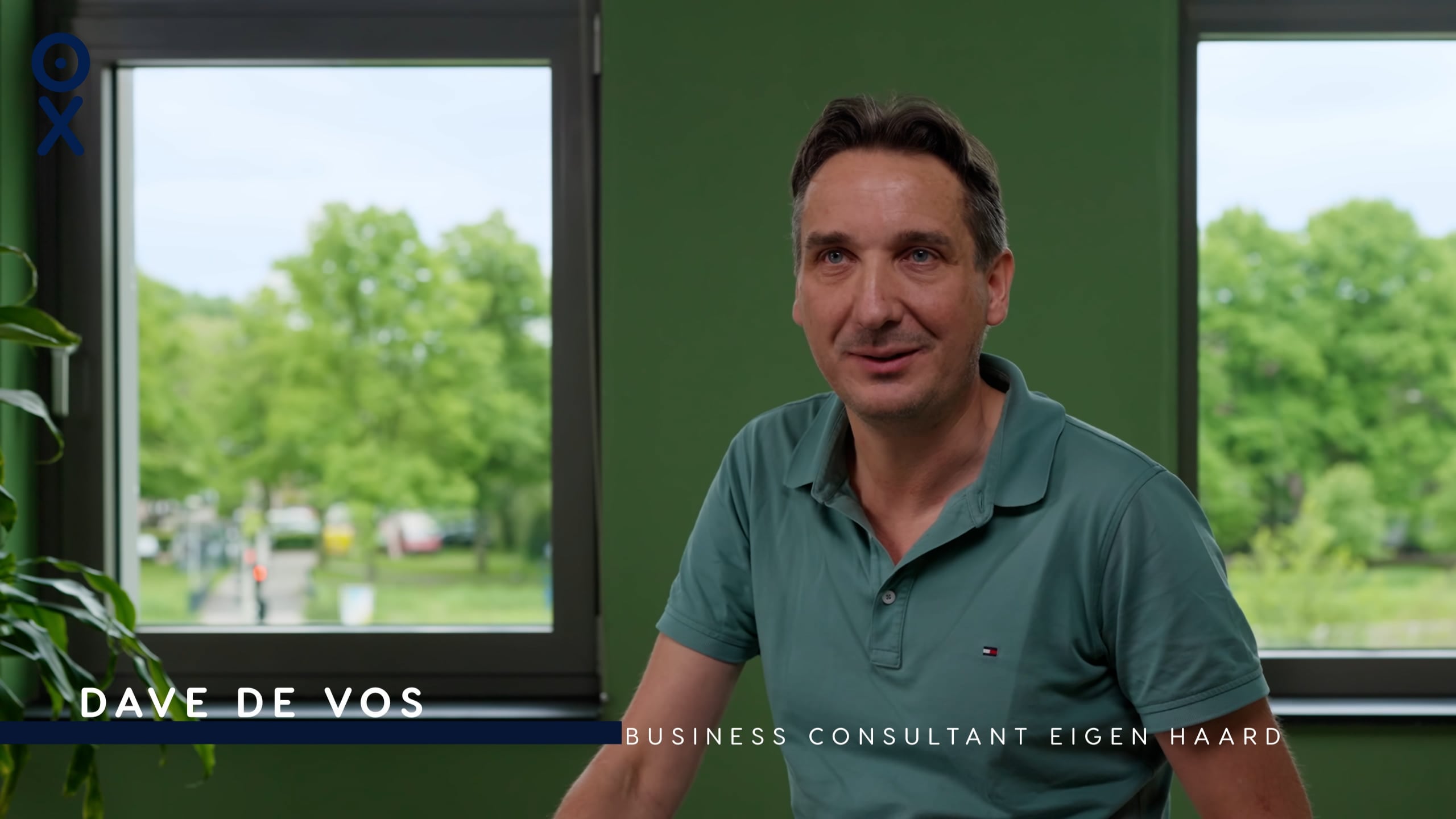
“It’s impossible to comply with laws and regulations if you had to manually clean up more than 55,000 tenant records. Automating the legally required data cleanup is the only viable solution.”

Dave de Vos,
, Process Management Consultant

Accept advertising cookies to view this content.

Accept advertising cookies

Optimal Document Management in Modern Housing Associations

Housing associations seeking to achieve smarter and more efficient communication by centrally managing all information and documentation now need something different: no longer a DMS system, but anEIM system for housing associations—which stands for Enterprise Information Management. This system not only addresses the challenges mentioned but also offers the advantage of an extremely high level of security.

About Eigen Haard

Eigen Haard is a housing authority that is actively committed to improving information management. By implementing an Enterprise Information Management solution, the organization has made its tenant information more efficient, secure, and searchable. Employees can now find and process documents more quickly, while tenants can easily access their own data through a customer portal. This digital transformation contributes to better service and greater control over compliance.

Customer Case Studies
OneXillium - barentz-logo
Customer Case Studies
OneXillium - Logo_BNP Paribas
Customer Case Studies
OneXillium - logo-carbogen-amcis
Customer Case Studies
OneXillium - logo-p1-qpark
Customer Case Studies
OneXillium - Logo_van-lanschot
Customer Case Studies
OneXillium - Gelder Logo
Customer Case Studies
OneXillium - Scratch Logo
Customer Case Studies
OneXillium - heleon-group-logo
Customer Case Studies
OneXillium - Animal Welfare Logo

Request a no-obligation consultation!

Are you inspired?

Eigen Haard isn’t the only housing authority using our EIM solution, Xtendis. Learn all about it on our housing authority page, or contact us if you’d like to gain even more insight and control over your overall information management.