Protecting the Weakest Link in Cruise Cybersecurity
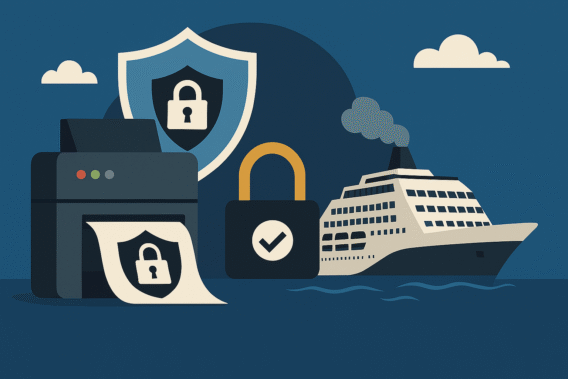
Cruise ships have evolved into floating, interconnected IT ecosystems. They rely on cloud platforms, satellite networks, hotel systems, OT infrastructure, and thousands of guest-owned devices. This complexity brings with it risks, and attackers are well aware of this. Cruise lines are investing heavily in cybersecurity. Yet one area remains consistently under-secured: printers!
Are a real cyber threat
Across multiple onboard assessments, we continue to find:
- Outdated firmware that exposes known vulnerabilities
- Printers malfunctioning or transmitting unencrypted data
- Unsecured connections to third-party applications
- Devices connected to network segments accessible from public areas
- Weak or missing authentication on the printer interface
In an industry where uptime, compliance, and guest satisfaction are critical, this creates unacceptable security vulnerabilities.
Or unsecured printers
A compromised printer can give attackers access to sensitive data or internal systems. It can disrupt operations, delay communication with guests, and weaken the ship's overall cybersecurity posture.
Printers are not harmless office tools; they are IT endpoints that must be managed with the same discipline as servers, workstations, and OT equipment.
The print environment
A secure-by-design printing strategy includes:
- Encrypted data flows
- Strong authentication
- Centralized monitoring
- Automated firmware management
- Zero-trust policies for devices
This transforms printers from vulnerabilities into controlled, compliant, and predictable assets.
OneXillium helps
We conduct printer security assessments specifically tailored for cruise operations. We identify:
- Security vulnerabilities
- Firmware and Configuration Risks
- Unsecured network connections
- Inadequate access controls
- Exposure to guest networks or public areas
You’ll receive a clear, actionable report to strengthen your fleet’s cyber resilience.